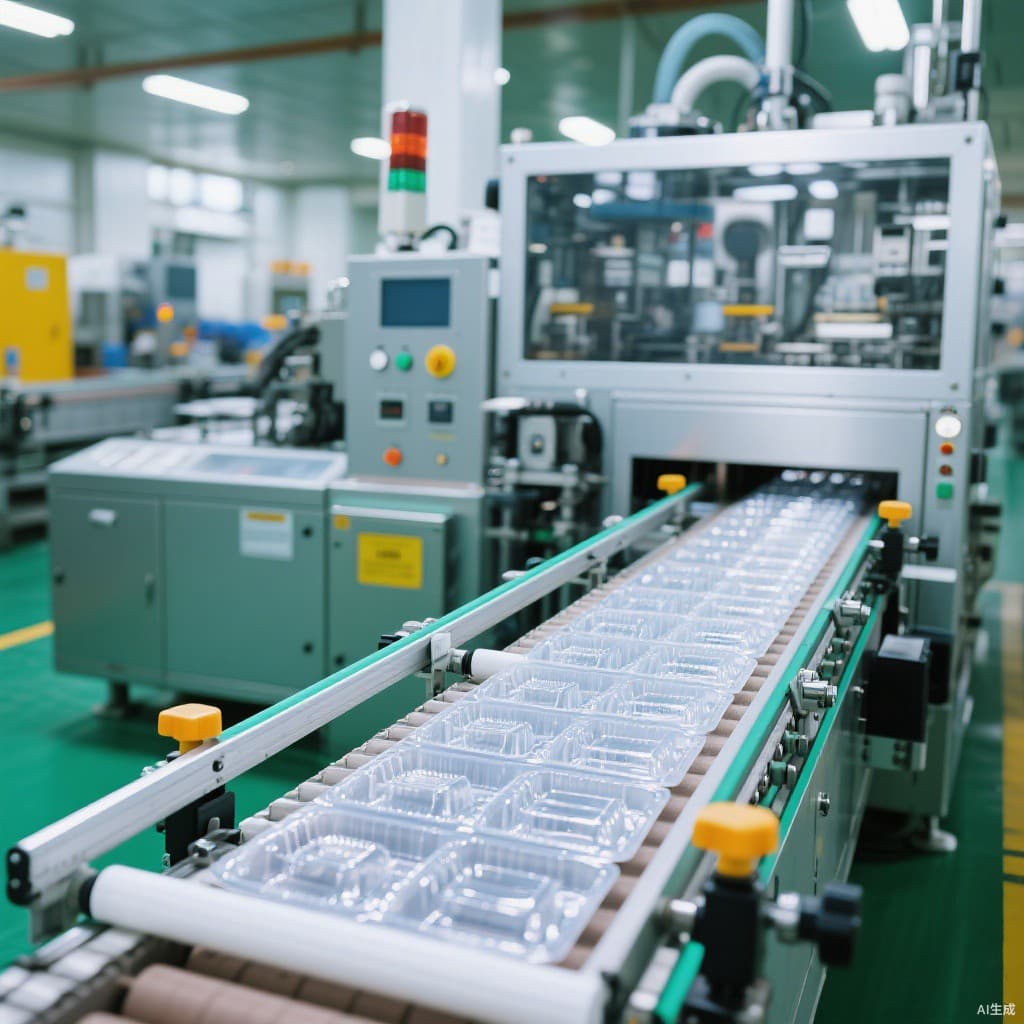
Sustainability has shifted from a marketing buzzword to a procurement requirement. Across the electronics, cosmetics, and food sectors, brand owners now mandate measurable reductions in packaging carbon footprint, recyclability, and use of post-consumer content. Thermoforming—long criticized for relying on single-use plastics—is responding with a new generation of eco-friendly materials and process improvements. RPET (Recycled PET). RPET is the most mature sustainable thermoforming material, made from recycled beverage bottles and post-industrial PET scrap. Modern RPET sheets match virgin PET in clarity and mechanical performance while cutting embedded carbon by up to 60%. Leading thermoformers now offer 100% RPET clamshells certified by UL2809 and RecyClass, closing the loop for retail and food packaging. Bio-based PET and PE. Derived from sugarcane ethanol rather than petroleum, bio-based PET and PE are chemically identical to their fossil counterparts and fully compatible with existing recycling streams. They allow brands to reduce Scope 3 emissions without redesigning packaging or tooling. PLA (Polylactic Acid). PLA is a compostable bioplastic derived from corn or sugarcane. It thermoforms well into clear cups, trays, and windows and is certified compostable under EN 13432 and ASTM D6400 industrial composting conditions. PLA is best suited for regions with access to industrial composting infrastructure; it is not designed for backyard composting or general recycling. PP with post-consumer content. For durable applications, PP blended with up to 30% post-consumer recycled content offers a pragmatic balance of performance and sustainability, particularly for food containers and industrial trays. Beyond material selection, leading thermoformers are reducing environmental impact through lightweighting (removing 10–20% of material without sacrificing strength), solar-powered production lines, closed-loop water systems, and in-house scrap regrinding that diverts manufacturing waste from landfill. When evaluating a sustainable packaging partner, request ISO 14001 certification, third-party carbon footprint data, and documented recyclability claims. The most credible suppliers will also provide life-cycle assessment (LCA) studies comparing options on a cradle-to-grave basis, helping brands make defensible, data-driven sustainability decisions.