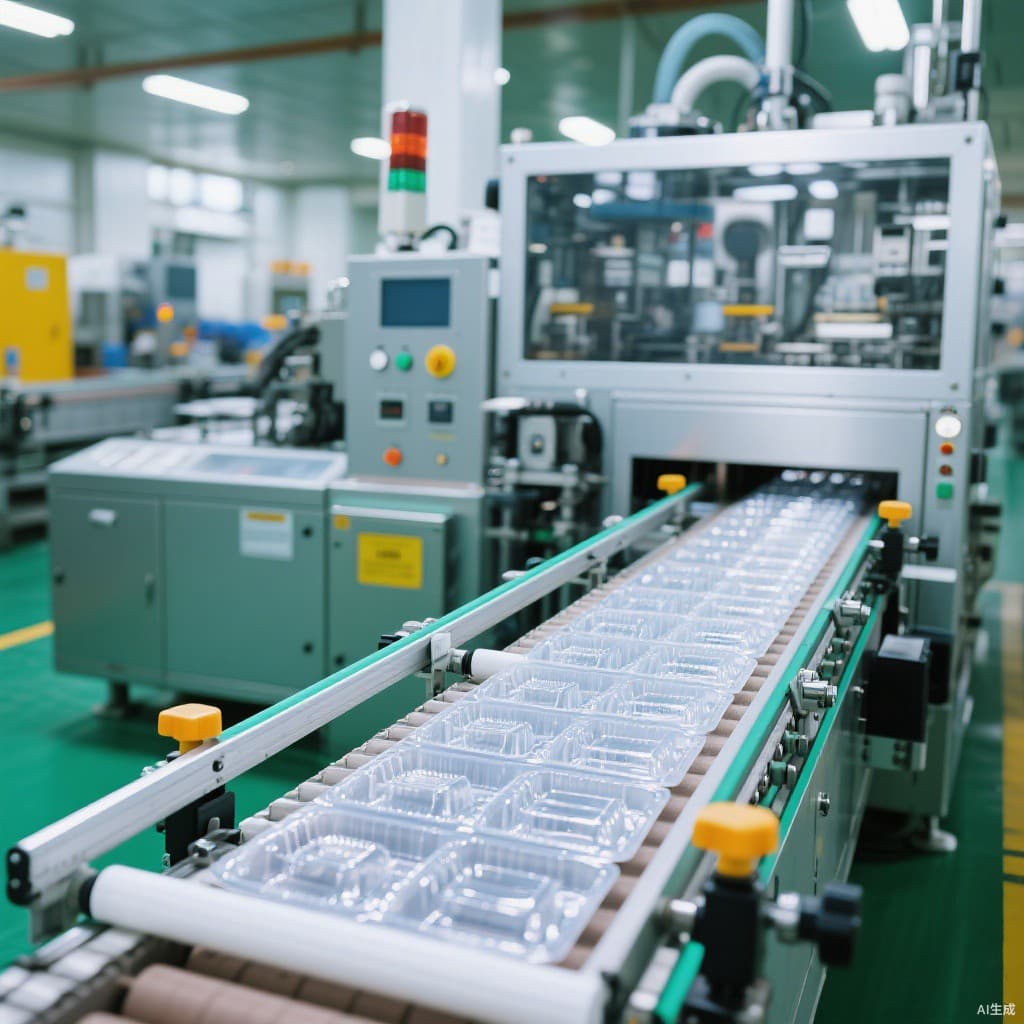
Bringing a custom blister pack from concept to mass production is a multi-stage engineering process that, when executed well, shortens time-to-market and prevents costly tooling revisions. This guide walks through the five phases packaging engineers should follow when developing thermoformed blister trays and clamshells. Phase 1 – Requirements Definition. Begin by documenting the product's dimensions, weight, fragility, ESD sensitivity, and expected shipping environment. Define regulatory requirements (FDA, RoHS, REACH), target annual volume, and budget. These inputs drive every subsequent decision, from material choice to tooling material. Phase 2 – Material Selection. Match material to application: PS for rigid electronic trays, PET for transparent retail clamshells, PP for high-temperature or food contact, and ESD compounds for sensitive semiconductors. Confirm availability in the required thickness—typically 0.3mm to 2.5mm—and request material data sheets. Phase 3 – 3D Design and Simulation. Using CAD software such as SolidWorks or Pro/ENGINEER, create the cavity geometry, draft angles (3° to 7°), and trim lines. Run thermoforming simulation to predict wall thinning, especially at corners and deep draws. A common rule of thumb is draw ratio (depth-to-width) below 1:1 for standard forming, up to 2:1 with plug assist. Phase 4 – Prototyping. Before cutting production aluminum tooling, produce prototype samples using 3D-printed molds or quick CNC-machined composite molds. Prototypes validate fit, function, and aesthetic, and allow automated pick-and-place testing. Expect 2–3 prototype iterations to refine draft angles and cavity tightness. Phase 5 – Tooling and Mass Production. Once the design is frozen, invest in temperature-controlled aluminum molds with optimized vacuum hole patterns. Pilot production validates cycle time, dimensional capability (Cpk > 1.33), and surface resistivity consistency for ESD trays. Establish incoming inspection, in-process inspection, and final inspection per ISO 9001, and archive first-article inspection (FAI) reports. Throughout all phases, maintain close collaboration between design, tooling, quality, and the customer. A disciplined approach—requirements, material, simulation, prototype, production—reduces revision cycles and delivers blister packaging that performs reliably from day one of mass production.